Friday, October 8, 2010

Lessons from a CNN journalist's Twitter experiment

Anchor Jim Clancy, CNN International.

CNN's Jim Clancy recently posted this question to a worldwide audience via Twitter:
clancycnn  Clancy File #QOD : Would you cancel a trip to Europe or change your plans due to the new terror warnings? Tweet away! Tune in The Brief!
Although a number of viewers responded to Clancy's question, the US Department of Fear would not call  Clancy's experiment a success.  We analyzed the responses only to discover that not a single respondent to Clancy's question choose to share anxiety.   All Clancy got back for his efforts, by way of response, were foolish expressions of bravado.

How to account for the disappointing response? It needs to be noted that Clancy's followers on Twitter are not the Fox News audience. They are CNN viewers.    Studies show that compared to Fox News viewers, people who watch CNN tend not to be well informed about terror threats.   On Fox News, even the most speculative threats get hours of airtime.  Nevertheless, CNN is making progress in this regard (we were impressed by its special report on the risk of "cyber attack").    A more pertinent factor is that Clancy's show is broadcast on CNN International, which, compared to its stateside sister network, puts excessive emphasis on reporting actual news stories.  Too much reporting of foreign news means too little airtime for interviews with experts about terror threats.

However, most of the responsibility for the disappointing response lies with the journalist himself.  Jim Clancy is not only a CNN anchor but a  foreign correspondent with decades of experience in war zones from Beirut to Afghanistan.  DoF maintains that foreign correspondents like Clancy have special responsibility --  a moral obligation in this dangerous world -- to show people that it's normal to be scared.    Viewers needed to hear from Jim Clancy himself about his own feelings.  The public yearns to hear from someone with Clancy's background that it's natural to feel scared when a Terror Alert happens.  But Clancy neglected to express his own personal concerns about travel to Europe.  Had Clancy given even a hint of his own personal trepidation about getting on a plane, riding the London underground, or strolling the Champs-Élysées, you can be sure that viewer anxiety would have spread like a shock wave.  The audience would then have thought:  if a guy like Clancy is worried, maybe I should be too.  

Fear wants to travel.  Clancy blocked its transfer by being overly cerebral.  Of course, thinking is not what journalism is supposed to be about.  Great journalism is about helping audiences to feel.   Fox News has this figured out, but CNN still doesn't get it.

Incidentally, the new media model for the transmission of anxiety by way of Twitter, as discussed in the previous post, is British recording artist Lily Rose Allen.   Jim Clancy and other journalists trying to reach out to the public on Twitter would be well advised to study her example.

Wednesday, October 6, 2010

Friends share fear

The Storm (1893) by Edvard Munch: The women of the town have gathered outside a house to share their fears.
In a previous post, the US Department of Fear urged readers to turn to social media in the aftermath of a Terror Alert.   We've been getting a lot of positive email about our proposal. 

But a question is also coming up.  Some readers are asking:  What if you aren't comfortable using social media?  

Good question. Just because Terror Alerts are transmitted through the electronic media, this doesn't mean you have to use technology to express yourself.  Why not strike up a conversation about the new threat with the people in your life?   We all have friends or acquaintances who don't understand the risks posed by terrorism (think of any people you know who don't watch Fox News).   

Perhaps you have a friend like Jacey Mint from Winchester, Virginia.   After Jacey's good friend Kate irresponsibly urged her "not to worry" about the recent Travel Advisory for Europe, Jacey says it was only by hearing "people around me keep talking about it" that she began taking the latest threat seriously:  
jaceymint Even though @communikate told me not to worry about the terrorist threat level, people around me keep talking about it & I am freaking out.
Friends share fear. If you don't feel the urge to talk about it for your own peace of mind, do it for the sake of scaring someone else.  Do it for a Jacey Mint in your life.

Monday, October 4, 2010

Coping with Terror Alerts the Lily Rose Allen way


The State Department recently issued a Travel Alert for Americans contemplating a trip to Europe. It's based on intelligence that the terrorists are planning to attack tourist venues.

State Department under secretary Pat Kennedy told reporters by way of a conference call today: "We are not asking Americans... we are not, not, not saying that they should defer travel to Europe at this time, absolutely not."

If you shouldn't cancel your trip, what should you do?   In a word, communicate!  DoF suggests you share your thoughts and feelings -- your concerns, worries, anxieties -- with other people by way of social media.  That's what people on the frontier of new media are doing.  For example, a tweet by British recording artist Lily Rose Allen recently caught our attention: 
  • lilyroseallen Oh god, foreign office have put people travelling to France on high terror alert!!! I'm in Paris already.
    The above tweet was retweeted by no fewer than 22 Lily Rose Allen fans.  Lily Rose then reflected on some recent experiences that had made her afraid, and she shared these fears with her fans:
    • lilyroseallen Scared being here but scared to get on the Eurostar home.
    • lilyroseallen Come to think of it. The day before yesterday there was this weird guy balancing a small bottle of something on his knee.
    • lilyroseallen He was sat next to me at a taxi rank, I thought he was being strange so I snuck a picture.
    • lilyroseallen I hope I'm just being a mad paranoid pregnant lady and that he wasn't a terrorist about to unleash deathly virus.

    The last tweet about the possibility she had just encountered "a terrorist about to unleash a deathly virus" was re-tweeted 52 times.

    Lily Rose is a world famous creative artist.  Don't be discouraged if your mind doesn't work the way hers does; if your imagination doesn't run away with you so quickly.   It's enough to simply share what you feel. 

    Lily Rose's tweets prompted dozens of her fans to share their own concerns about terrorism:
    • nicocleo seriously, we are all concerned at the news of high terror alert all over Europe :-(
    • P_L4NE yeah unscrew the lid of that end of the world!! made in Affstaniganh by osama bin  
    •  jessiesyard cross your fingers bit when it's high terror alert tis usually means they foiled a plot it's when (cont) 
    • missbufton I totally know how you feel. Rucksacks, public transport and me are the worst combo ever. 

    One fan tweet stands out -- it's one every celebrity should take to heart: 
    • emz194 ♥ @lilyroseallen for tweeting normal tweets rather than advertising shit like every other celeb....boring!!!
    What is more normal than feeling anxious about a Terror Alert?  As we like to say, real friends share fear.  Even if you're not a celebrity, supposing you want more followers on Twitter, you would be well advised to emulate Lily Rose Allen.    

    The Department of Fear has been won over by Lily Rose Allen.  To us, she's a veritable "Fear Superstar."  Whether on Twitter or Facebook, we know that there are many others out there sharing fear.  Although you may not be as well known as Lily Rose, we admire you just as much.  A list of our favorite tweets is available here 

    What kind of ally is Germany?

    German Interior Minister Thomas de Maiziere refuses to warn Germans about the new risks.
    In an article entitled "Germany downplays terror threats announced in US, British travel alerts"  Deutche Welle, the German state broadcaster,  reports on the reckless behavior of certain German officials:
    The US media have extensively covered the US State Departments' travel alert for Europe, even naming specific targets in Berlin and Paris. But Germany says the threat of a terror attack is no higher than usual.

    US television broadcaster Fox News, citing intelligence sources, reported that the Brandenburg Gate, the notable television tower at Alexanderplatz, and the central train station were specific targets of potential terror attacks in Berlin.

    ...despite specific targets being mentioned, the interior ministry in Berlin sees no reason to increase Germany's terror threat level and has said it will continue its current state of vigilance.

    In a statement to reporters on Monday afternoon, German Interior Minister Thomas de Maiziere said that although there continues to be a general "high abstract threat" of terrorism in Germany and other European countries, he warned against overreacting to the travel advisory and media reports.

    "There are currently no indications of any immediate threat of attacks planned against Germany," said de Maiziere. "There is no reason whatsoever to be alarmist at the moment."
    This story by the German broadcaster neglected to mention that the present terror threat emanates from Hamburg:
    A group of eleven or so jihadists from the German city of Hamburg are alleged to be at the center of the recent al Qaeda plot to launch co-ordinated terrorist attacks against European cities, according to a new report by CNN.
    The German government has no business downplaying the severity of the threat.  That's why, during an emergency cabinet meeting scheduled for Monday tonight, Fear Sec. Malcolm P. Stag III is likely to urge President Obama to recall the American Ambassador to Germany.  

    Of course, that's unlikely to help the situation.   This is not a case of a few bad apples in the Reichstag.  The truth of the matter is that today Germany is a mere shadow of its former self.

    Thursday, September 23, 2010

    Dick Cheney Carbon Memorial

    An artist's sketch of the Dick Cheney Carbon Memorial. 

    Dick Cheney Carbon Memorial
    DoF is proud to support the planned "Dick Cheney Carbon Memorial" (DCCM).  The plans call for the monument to be erected on the Mall in Washington D.C.    The purpose of the monument is to recognize the contribution of carbon fuel to American prosperity and honor those who have fought to preserve the American Way of Life.

    Location
    The DCCM will be built on the Ellipse -- an empty expanse of  lawn located between the Washington Monument and the White House.   

    Specifications and symbolism
    The monument will feature a 300 foot tall drilling tower enclosed by a fifty foot high security perimeter.

    Mr. Cheney once said, "You got to have people at the top who respond to and are selected by presidents."  Perched at the top of the oil rig will be a statue of Vice President Dick Cheney.   The forty-foot tall vice president will face the White House.   The position of the statue will symbolize the oil industry's support for the modern American presidency.   The blast wall surrounding the drilling tower will symbolize the need to secure oilfields.

    On the interior of each of the four stone walls will be inscribed the following:
    • West Wall:  Names of early Iraq war champions: Richard Perle, Paul Wolfowitz, Kanan Makiya, Douglas Feith, Elliott Abrams, and Ahmad Chalabi.
    • East Wall:  The Four Fears
    • North Wall:   Names of terrorists captured or killed since 9/11 listed by country of origin.
    • South Wall:  Two Cheney quotations.  First quote:  "Conservation may be a sign of personal virtue but it is not a sufficient basis for a sound, comprehensive energy policy."   Second quote:  "I'm absolutely convinced that the threat we face now ... is very real and that we have to use extraordinary measures to deal with it."
        
      National Museum of Interrogation
      Once visitors have cleared the security perimeter and are safely inside the monument compound they will be able to board an elevator that will descend one hundred feet below ground to a large subterranean cavern.   The space will house the new National Museum of Interrogation.  Exhibits will teach visitors about the role of advanced interrogation methods in keeping America safe during the dangerous post 9/11 years.   For example, staff will demonstrate the "stress positions" and invite guests to attempt them.  Visitors can enjoy interactive multimedia shows in the Waterboarding Gallery.   Kids can explore the fuselage of a Boeing jetliner that was used for extraterritorial renditions.   Teenage visitors will surely gravitate to the Drone Pilot Simulator  where they can practice targeting and firing upon suspected terrorists. 

      The underground museum will also contain a full-scale replica of the subterranean White House bunker in which Cheney spent the better part of his eight years as vice president.  

      Sponsorship
      The DCCM will be a gift to the American People from a consortium of multinational energy companies and leading defense contractors.    DoF is also a proud sponsor of the project.

      Saturday, September 18, 2010

      The Four Fears

      The Four Freedoms are engraved in stone at the Franklin Delano Roosevelt Memorial in Washington D.C.   
      In his State of the Union Address of January 6, 1941, Franklin Delano Roosevelt proposed rights that people "everywhere in the world" ought to enjoy in what would become known as his "Four Freedoms" speech.  

      Seventy years later, in a speech at the Free Enterprise Institute, a Washington DC think tank, SecFear Malcolm P. Stag III gave an important address to the defense and intelligence communities.  The statement was broadcast live on Fox News.   In the historic speech SecFear discussed his vision for America, modeled after FDR's "Four Freedoms".

      SecFear said, "I call upon our government and its partners in industry to embrace the new state of the American psyche.  The time has come to commit ourselves to 'The Four Fears.'"

      SecFear described the "Four Fears" as bedrock principles for a new American century.  On an overhead screen, over an image of stars and stripes, a list of The Four Fears was projected:
      The Four Fears
      • Fear of Terrorism
      • Fear of Social Activists
      • Fear of Marijuana
      • Fear of Illegal Immigrants
      Sec. Stag said, "Security professionals should constantly remind the public of the Four Fears. This is the best way to ensure continued public support for profitable national security initiatives."

      Wednesday, August 25, 2010

      Yemen home to world's most dangerous terrorists

      A Washington Post report informs us as to the nature of the next big threat:
      For the first time since the Sept. 11, 2001, attacks, CIA analysts see one of al-Qaeda's offshoots -- rather than the core group now based in Pakistan -- as the most urgent threat to U.S. security, officials said.
      To paraphrase one of our country's Founding Fathers, the price for freedom is knowing what we have to fear next. 

      Tuesday, August 24, 2010

      Size of defense budget best measure of national security

      What does Gary Hart stand for?
      One thing we learned from George W. Bush was that when it comes to keeping America safe, a true leader goes with his gut.   On the other end of the spectrum, you have politicians like Gary Hart who are inclined to pose a lot of challenging questions before deciding whether to bomb another country.

      But that's not the worst of Gary Hart's leadership defects.   James Fallows writes on his blog at the Atlantic: 
      I am biased in favor of Gary Hart. I met him when researching my book National Defense back at the dawn of the Reagan Administration. At the time, as a first-term Senator in his early 40s, he was a genuine pioneer in pushing the concept of "defense reform" -- the then-radical idea that we should judge our military policies on grounds more complicated than "spend more" versus "spend less." Defense reform is a radical idea still, but that's another topic. 
      What Hart -- and by the sounds of it Fallows too -- don't understand is that there is good reason for evaluating the efficacy of the defense policy of the United States on  the size of the defense budget.  Today it is widely understood that the more the US spends on defense, the more national security we have.  And that's a good thing.   The more money Americans spend on defense, the more conscious Americans can be made of the gravity of the threats this country faces.   Some defense spending, of course, goes toward publicizing threats; making the American people aware of the fact we live in a dangerous world.  A strong defense sector supports quality advertising and a news media well-attuned to highlighting national security risks.

      Imagine living in a country where your only source of information was the equivalent of NPR, and you couldn't tune into Fox News or listen to Rush.  A place like that exists.  It's called Europe.  Relative to America, Europeans spend very little on defense.   As a result, the populations of European countries think they have less reason to be afraid. Indeed, Europeans are less fearful.  Europeans never feared Communist Russia in their bones, the way Americans did, right up until the end of the Cold War.   Europeans did not show sufficient fear of Saddam Hussein prior to the Second Iraq War.    Even today, except for a few of our allies in Holland and England, Europeans generally do not have sufficient fear of terrorism.  Also, Europeans seem indifferent to the outcome of the war in Afghanistan and oblivious to the threat now posed by Iran.

      If Europeans spent more on defense, they would spend more time contemplating such threats.  The defense sector wants to advertise, it wants to spread public awareness of various dangers, but it needs to be properly funded.

      Defense spending is the tried and proven measure of American security in our dangerous world.  Yet some people don't get it.

      Thursday, August 19, 2010

      "Most of Canada would die, too"


      One citizen who read the article commented, "This is without a doubt the scariest thing I have ever read."   Another astute reader commented, "It's not a matter of 'if' an EMP attack is launched at the U.S. - it's a question of 'when?'" 

      They were commenting on "End of the world...for real" by James Jay Carafano of the Heritage Foundation. The article was recently published in the Washington Examiner:
      A high-altitude nuclear explosion can create an electromagnetic pulse that mimics a solar tsunami, a fact validated in 2004 by the Commission to Assess the Threat to the United States from electromagnetic pulse attack (EMP).

      A massive EMP attack on the United States could produce almost unimaginable devastation by wiping out essential infrastructure. Communications would collapse, transportation would halt, and electrical power would disappear. Not even a global humanitarian effort would be enough to keep hundreds of millions of Americans from dying of starvation or exposure.

      Nor would the catastrophe stop at our borders. Most of Canada would die, too. Its infrastructure is integrated with the U.S. power grid. Without the American economic engine, the world economy would quickly collapse. Much of the world's intellectual property (half of it is in the United States) would be lost as well. The Earth would likely recede into the "new" Dark Ages.

      There's nothing we can do to prevent a solar tsunami, but thwarting a nuclear missile attack is well within our capabilities. "Countering the EMP Threat: The Role of Missile Defense," (PdF) a recent report from the Independent Working Group (IWG), offers some practical and readily achievable recommendations...
      With the thawing of the Cold War era, many of us thought the threat of EMP had receded.  But the IWG authors point to a new danger: the possibility that a terrorist will try to use EMP against America:
      Several years ago, Iran tested a short-range ballistic missile in a way that indicated an interest in developing an EMP capability— so this threat is not hypothetical. It also must be remembered that terrorists might purchase such missiles—even possibly armed with nuclear weapons.
      What can America do?   We must fund the development of a robust missile defense system.  In these times of budget cutbacks, this will require political resolve.  A March 30 Time Magazine article explores how some far sighted Americans are working to build the political will to fund the development of the EMP defenses we need:
      "Despite repeated warnings, Congress has taken virtually no action to prepare or protect against an EMP attack," write the Heritage Foundation's Jena Baker McNeill and James Jay Carafano. "In order to facilitate a national discussion regarding the EMP threat, Congress should establish March 23 as EMP Recognition Day" — not coincidentally, that's the date of Reagan's famous 1983 speech launching his missile-defense initiative.
      As its own contribution to EMP Recognition Day, the Heritage Foundation... is urging lawmakers to shut down congressional cafeterias, walk to work, shut off their BlackBerries and turn off the lights. "If Congress took these four steps for one day," the Heritage Foundation says, "all members would understand the magnitude of the dangers posed by an EMP attack."
      DoF strongly supports this worthwhile initiative.   

      Thursday, July 29, 2010

      Press needs to realize terrorists not the only threat


      Today a must-read Wall Street Journal editorial explained the extent to which press freedom constitutes an ever-present threat to our national security. Pointing to the recent unauthorized release of secret US government documents by Wikileaks, the paper explained that by continuing to exercise its freedom, "the press will put its own freedom in jeopardy."  

      True enough.  But to their credit, the WSJ's editors took the occasion to remind us that threats to national security extend far beyond terrorism: 
       But the closer we and others have looked at the documents, it's clear that the WikiLeaks dump does reveal a great deal about the military's methods, sources, tactics and protocols of communication. Such details are of little interest to the public at large, and they are unlikely to change many minds about the conduct, or wisdom, of the war. But they are of considerable interest to America's avowed enemies and strategic competitors such as Russia and China.
      It is important to realize that the terrorists are by no means the only threat that America faces.

      In the interests of national security, DoF Secretary Malcolm P. Stag echoed the Wall Street Journal editors in comments at a press conference this morning:

      "'Freedom of the press' must be balanced against the 'risks of the press'," said SecFear.

      Wednesday, July 7, 2010

      Terrorists monitoring Gulf of Mexico oil spill response?


      The Gulf of Mexico oil spill is a tragedy.  But imagine how much worse it might be next time should terrorists have an opportunity to study the impact and scope of the present disaster.    At this moment, terrorist cells may be seeking information concerning the operations of America's disaster-response capabilities.

      Fortunately, our friends at Homeland Security have partnered with local law enforcement agencies and some private security firms contracted by British Petroleum.  Together, public and private security forces are keeping a vigilant eye out for suspicious activity in the vicinity of the Gulf of Mexico coastline.   Overly curious or suspicious people are being stopped and questioned.  Raw Story (via 10%):
      The photographer, Lance Rosenfield, said that shortly after arriving in town, he was confronted by a BP security officer, local police and a man who identified himself as an agent of the Department of Homeland Security. He was released after the police reviewed the pictures he had taken on Friday and recorded his date of birth, Social Security number and other personal information. The police officer then turned that information over to the BP security guard under what he said was standard procedure.
      In the wake of the recent natural disaster in the Gulf of Mexico, America's public and private security personnel must balance the freedom of the public to move about and photograph things against some vital national security interests.    In these dangerous times, the latter has to be given a lot more weight.

      Preventing terrorist conquest of North Africa


      UPI:
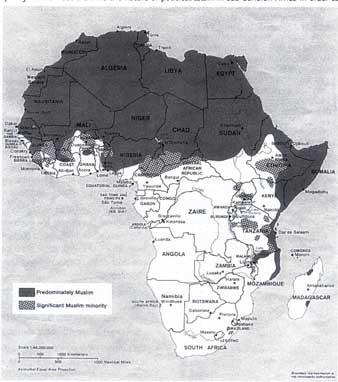
      North African Islamist militants linked to al-Qaida are reportedly building heavily fortified bunkers in the Sahara Desert against airstrikes as Algeria and its neighbors mount a combined offensive against them.

      Security authorities in Algeria and Mali, its southern neighbor, have reported construction work in their territories. Fortifications are also being built along the border with Niger, east of Mali.
      The potential terrorist conquest of North Africa is a real and growing national security concern.

      DoF urges the president to initiate predator drone strikes against various locations in Mali, Algeria, and Niger -- anywhere terrorists are suspected of hiding.   Although such measures will certainly not eliminate the threat, it will bring the war to the terrorists.    To paraphrase the former vice president: if we fight them over there, maybe we won't have to fight them here.

      Monday, June 28, 2010

      Fear sustains NATO mission in Afghanistan

      Explaining the continued need to wage war in Afghanistan, UK Defense Secretary Liam Fox writes in a WSJ op-ed:
      We must hold our nerve and maintain our resilience. If we want people to pay the price of success, we must spell out the cost of failure. If NATO left Afghanistan now, the Taliban would wrest control of parts of the country and al-Qaeda and their terrorist training camps could return. It would be a shot in the arm to violent extremists everywhere. Instability could spread across this volatile region. Failure would also damage the credibility of NATO, which has been the cornerstone of the defense of the West for the past half-century. We would be less safe and less secure, our resolve called into question and our cohesion weakened....

      American and Britain have stood shoulder to shoulder many times in the past, in the face of tyranny and adversity—in defense of freedom. Today in Afghanistan we stand shoulder to shoulder again, alongside our many partners and alongside the Afghans themselves. The struggle against terrorism endures and is bigger than any single country or any single leader, political or military...
      UK Defense Secretary Liam Fox understands that fear is critical to sustaining the commitment of Americans to fighting the war in Afghanistan and is determined to stoke it.  DoF is a proud partner of the new government of Great Britain.

      Once identified, ICE will respond


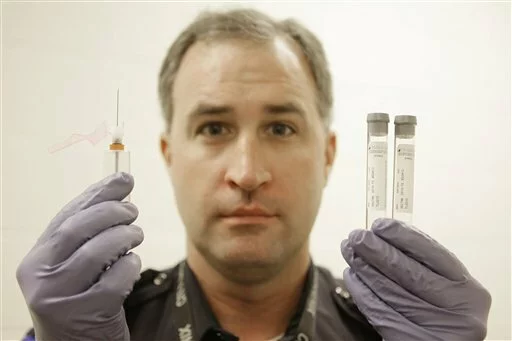
      Do you live in a Secure Community?   Legislation passed by Congress in May 2010 compels anyone who is arrested in the United States to give a blood sample.  Once the DNA of every suspect has been entered into a national database, the information can then be shared with various agencies, such as DHS or DoF.  Armed with biometric information, we can root out potential terrorists, and others deemed to pose a threat to national security.
      RICHMOND, Va.- U.S. Immigration and Customs Enforcement (ICE) announced Secure Communities was activated as of last week in every county in the Commonwealth of Virginia. This biometric information sharing strategy enables ICE to identify any alien booked into local law enforcement's custody for a crime. This capability is part of ICE's comprehensive strategy to improve and modernize the identification and removal of criminal aliens from the United States.

      Formerly, during the booking process, arrestees' fingerprints were checked for criminal history information only against the biometric database maintained by the FBI. With the implementation of Secure Communities, this fingerprint information is now automatically and simultaneously checked against both the FBI criminal history records and the biometrics-based immigration records maintained by the Department of Homeland Security (DHS). If any fingerprints match those of someone in the DHS biometric system, the new automated process notifies ICE.  ICE evaluates each case to determine the individual's immigration status and takes appropriate enforcement action. This includes aliens who are in lawful status and those who are present without lawful authority. Once identified through fingerprint matching, ICE will respond...
      Eventually, the agency urges Congress to approve the acquisition of a far more comprehensive database that would include the DNA profile for every resident of the United States.   For example, blood samples should be required of anyone applying for a drivers license or passport. Ideally residents' biometric identification would be incorporated into a mandatory national identification card.   There are many government agencies and initiatives involving our partners in the private sector that could profit from having access to the biometric profiles of all residents.

      Friday, June 18, 2010

      "Protecting Cyberspace Act" targets WikiLeaks threat

      As anyone following the news knows, the United States is at risk of "cyber attack." The impact of cyber war could prove devastating to the economy (and imagine your life without Facebook). The cyber attack threat is not only real, it is broad, encompassing threats that include the potential leakage of classified documents.  For example, the unauthorized release of classified reports detailing how America continues to fight global terrorism.

      Fortunately, Congress is taking action:
      Confronting threats ranging from Chinese superhackers to the release of secret documents on WikiLeaks and other whistleblowing websites, the Obama administration may be on the verge of assuming broad new powers to regulate the Internet on national-security grounds...
      A new bill would grant President Obama the power to declare a “national cyber-emergency” at his discretion and force private companies tied to the Web, including Internet service providers and search engines, to take action in response—moves that could include limiting or even cutting off their connections to the World Wide Web for up to 30 days.

      The Protecting Cyberspace Act was introduced last week by Senator Joseph Lieberman, the Connecticut independent who is chairman of the Senate Homeland Security Committee, and Senator Susan Collins of Maine, the panel’s ranking Republican. Counterparts in the House Homeland Security Committee have endorsed identical legislation, meaning that a final bill could be adopted by the full Congress within weeks. The White House has not taken a stand on the legislation so far.

      Lieberman said the bill was intended to prevent a “cyber 9/11” in which “cyberwarriors, cyberspies, cyberterrorists and cybercriminals” take aim at the United States and try to shut down infrastructure that is dependent on the Internet—a list of targets that include everything from nuclear power plants to banks to Pentagon computer networks.
      We must hope Congress passes "The Protecting Cyberspace Act" quickly.  Of course, this kind of legislation cannot prevent a cyber attack from happening. The underlying danger will not go away. Nevertheless, our president must have tools at his disposal to contain the damage -- especially in the (likely) event WikiLeaks were to release more US government secrets. 

      We can never know what information the terrorists will try to use against us.   Common sense says that the fight against global terrorism requires that secrecy be maintained wherever possible throughout all levels of government.  Even the most innocuous government data, report, or document could be turned into a weapon that could be used by our enemies to destroy America.  That's why DoF urges that all federal agencies endeavor to classify information wherever possible.  

      Therefore, on one hand, the federal government must seek to classify everything it possibly can; on the other, it must clamp down on so-called "whistle-blowers." Fortunately, the Obama administration is taking the whistle-blower threat seriously.

      WikiLeaks is diametrically opposed to some fundamental DoF principles.    Although WikiLeaks cannot easily be shut down,  it can be contained and -- as a 2008 US Army Counterintelligence report suggests -- discredited.

      In the meantime, fear Wikileaks.

      Tuesday, June 8, 2010

      "An opportunity to share even the most tentative threats"

      The New York Times reports on how the US military is tapping social networking skills:
      Hunched over monitors streaming live video from a drone, Lieutenant Christopher and a team of analysts recently popped in and out of several military chatrooms, reaching out more than 7,000 miles to warn Marines about roadside bombs and to track Taliban gunfire...  

      ...three-quarters of the 350 analysts here have never been to the war zones, so a cultural divide can pop up. Several said they were a bit intimidated when Sergeant Smothers, 36, who has had five tours in Iraq, strode onto the floor here in February.

      At the time, the analysts were blending data from the U-2s and the drones to watch the roads into Marja and fields where helicopters might land. But as Sergeant Smothers looked over their shoulders, encouraging them to warn the Marines about even the most tentative threats, the analysts warmed up.
      The mission of America's social network warriors parallels that of DoF.   Just as Sergeant Smothers wants social networking military officers to "warn the Marines about even the most tentative threats,"  the Department of Fear wants you to share information about "even the most tentative threats" with your friends.  

      Let's say you hear that a terror suspect has been captured.   Shock soon gives way to relief that the monster was caught.  But deeper down you are likely frightened.  You are more than little nervous because you have doubts about whether your leaders have been doing enough to protect you.   DoF urges you to share these kinds of fears on a blog, video-blog, Facebook, or Twitter.  Communicate what would make you feel better:   Enhanced interrogation of the suspect?  Stripping the terror suspect of US citizenship? New laws passed by Congress to better balance freedom with security?  More pervasive wiretapping?  Fewer trials?   Shouldn't our president have the authority to do whatever it takes to avert another deadly terror strike?   Do you want to see more public investment in the US Military?  How about tax relief for companies responsible for manufacturing our great arsenal of democracy?  Should the president increase the frequency of US predator drone strikes throughout the Muslim World?  Has the time come to bomb bomb bomb Iran?  Share your personal priorities for making America feel safer. 

      If you're pressed for ideas, turn on Fox News.  Then get on twitter and tweet what you've learned. Or sign in to  Facebook where you should strive to be "authentic" with  your online friends.   Genuine people don't just poke their friends and share jokes.  They don't just fret about their diets and trade fashion tips. True patriots are concerned about the security of the homeland.   They talk about how the terrorists seem to hate us so much for our freedoms. They upload photos from FBI.gov of the week's "most wanted" terrorists and post them on their wall.   They chat about nightmare scenarios.*  They know that DoF is there to support them in making the most of today's social networking opportunities.  
      ___
      * America's pharmaceutical companies have developed products that help us to cope with anxiety.

      Saturday, June 5, 2010

      Gaza terror flotillas pose danger to Americans

      This week the world learned that the terrorists will even use the cover of aid ships as a pretext to attack Israeli soldiers.  The Jerusalem Post has profiled the identity of passengers on board one ship in the so-called "aid flotilla":
      Dozens of passengers who were aboard the Mavi Marmara Turkish passenger ship are suspected of having connections with global jihad-affiliated terrorist organizations, defense officials said on Tuesday, amid growing concerns that Turkish warships would accompany a future flotilla to the Gaza Strip.

      According to the defense officials, the IDF has identified about 50 passengers on the ship who could have terrorist connections with global jihad-affiliated groups.
      Israel apprehended ships full of terrorists in search of martyrdom.  According to a new DoF report, last minute intervention against the flotilla by the heroic IDF forces likely saved many American lives.  The report takes into account the timing of the flotilla mission.   Every summer thousands of American holiday-makers cruise the Mediterranean.  Cruise ships may well have been the intended target of the flotilla. Were it not for decisive Israeli military intervention, tourists might have unwittingly fallen prey to this terror flotilla.

      This is the third "Gaza aid flotilla," there will likely be others. In the eastern Mediterranean, the only thing standing between your cruise ship and a terrorist convoy is the Israeli military.  Take this opportunity to call your congressman or senator and ask that the United States increase military assistance to Israel.  

      Thursday, May 27, 2010

      DHS memo: record number of terrorist attacks on US

      CNN reports:
      Just weeks after the failed car bombing of New York's Times Square, the Department of Homeland Security says "the number and pace of attempted attacks against the United States over the past nine months have surpassed the number of attempts during any other previous one-year period."

      That grim assessment is contained in an unclassified DHS intelligence memo prepared for various law enforcement groups, which says terror groups are expected to try attacks inside the United States with "increased frequency."

      CNN obtained a copy of the document, dated May 21, which goes on to warn, "we have to operate under the premise that other operatives are in the country and could advance plotting with little or no warning."
      Most important government memos these days are classified.   But an exception to the rule is that any memo that could seriously scare Americans and remind them of their vulnerability to the terrorists is better left unclassified.  DoF commends Homeland Security for having quickly released this memo so that it could have maximum effect.

      Update: Only an hour after the CNN story was published, twitter users had "re-tweeted' links to this story perhaps one hundred times. Fear is wondrously contagious. (Tip: you can follow DoF on twitter).

      Wednesday, May 26, 2010

      Marketing expert calls for business to spread fear

      Marketing guru Chris Garret (h/t Guy Kawasaki) presents a ten-point plan for getting your message across.  We like number eight:
      #8: Appeal to Primitive Instincts

      Observe the newspapers. They sell ... fear because that’s what people respond to...    If you’re having trouble being heard, try turning your message into a warning ... emphasize the dangers.
      DoF strictly adheres to this principle.  We believe that our approach can be profitably applied by major corporations and throughout local, state, and federal governments.

      Saturday, May 22, 2010

      MSNBC says Taliban attacked Bangkok


      Supposedly on account of civil unrest, many buildings in Bangkok burned to the ground on May 19.   It was a scary situation for everyone in Thailand.   But for Americans, it was very nearly just another day.

      Fortunately, MSNBC made the most of the images.  Raw Story,  a blog, reports:
      People watching MSNBC Wednesday morning could be forgiven for believing that the Taliban had invaded Bangkok. As NBC's Ian Williams reported on violent protests in the capital city of Thailand, a graphic on the lower third of MSNBC's screen read: "New Taliban Attacks, Bangkok Burns."
      DoF has nothing but praise for the way MSNBC handled this story.

      MSNBC drew upon the depth of the news organization's ignorance about Thailand and conceived a terrifying hypothesis:  Bangkok is falling to our enemies.  The Taliban are on the move. At home, terrified MSNBC viewers would have been asking themselves: Will Honolulu be next?   Or will the Taliban head straight for LA?   

      There is a lesson here.  Whenever there is serious violence overseas, the US media should not hesitate to project whatever scenario evokes Americans' worst fears.  Discussion about what actually happened can be left to the following day's newspapers.